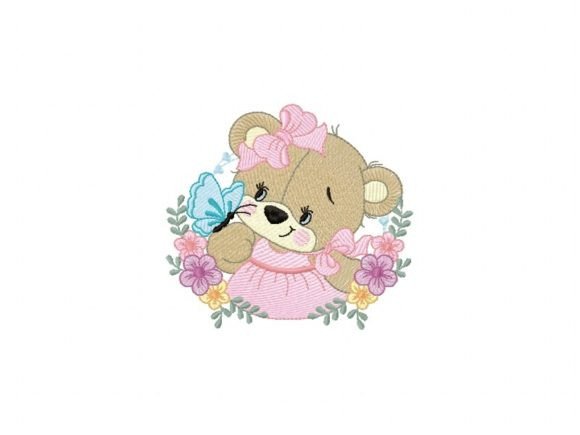
Bear with Butterfly Embroidery Review
As an embroidery designer who spends countless weekends navigating the chaos of craft fairs and handmade markets, I have learned that a design’s success is rarely just about how it looks on a screen. It is about how it performs under the harsh lights of a vendor tent, how it feels in a customer’s hands, and whether it stops them from walking past your table. Today, I am reviewing Bear with Butterfly, a design described as an endearing creation guaranteed to invite whimsical charm to any textile piece. My goal here is to strip away the marketing fluff and look at this file through the eyes of a business owner preparing for a busy weekend.
First Impressions: Whimsy Meets Marketability
The description highlights "friendly and lighthearted aesthetics," which immediately signals that this machine embroidery design falls into the popular "cute" and "whimsical" categories. In the current market, particularly within the Baby Animals niche, these themes are evergreen. Parents and gift-givers are constantly looking for items that evoke warmth and nostalgia. When I first visualize Bear with Butterfly, I imagine a soft, approachable character that pairs well with pastel threads or natural fabric tones. It does not scream loud modern minimalism; instead, it whispers rustic charm. This makes it highly versatile for handmade product lines that aim for a boutique, cozy feel.
For a booth display, visual hierarchy is key. A design needs to be readable from three feet away. If Bear with Butterfly relies on tiny, intricate details that vanish when stitched on a textured surface, it will struggle to compete. However, if the design balances bold shapes with delicate accents—like the butterfly wings—it has the potential to be a strong focal point. The "whimsical charm" suggests it works best when paired with complementary elements, such as floral borders or simple text, creating a complete scene rather than just a logo.
Product Application: Where Does It Shine?
Not every embroidery file translates equally well across different mediums. Based on the theme, here is where Bear with Butterfly is likely to generate the most sales:
- Tote Bag Design Opportunities: Canvas tote bags are the bread and butter of many Etsy seller shops. A whimsical bear design stands out beautifully against neutral beige or white canvas. Because totes are large surfaces, you can use this as a central focal point. It appeals to parents carrying baby gear or shoppers looking for a unique everyday carry item.
- Apron Embroidery: Kitchen aprons are a staple at craft fairs. Placing Bear with Butterfly over the heart or centered on the bib adds a touch of personality to functional items. This fits perfectly into the "farmhouse" or "cottagecore" aesthetic that remains popular among home cooks and bakers.
- Tea Towel Embroidery: Linen or cotton tea towels provide a smooth, high-contrast background. If the design includes fine details, the tight weave of a quality tea towel will hold those stitches better than a fuzzy fleece blanket. These are low-cost impulse buys that customers often grab while browsing other higher-ticket items.
- Embroidered Patch Potential: One of the smartest moves for a small shop product line is to digitize this design as a patch. Patches allow customers to personalize hats, backpacks, and jackets without committing to a full garment. They are easier to ship, require less setup time, and appeal to a younger demographic.
- Caps and Beanies: Curved surfaces like baseball caps present a challenge. If the design is too wide, it will distort. However, a compact version of the bear could work beautifully on the front panel of a cap, especially when paired with a small embroidered butterfly accent near the brim.
Production Realities and Technical Considerations
Before rushing into batch production for a Saturday market, there are practical hurdles every designer must address. The difference between a design that sells and one that results in returns often comes down to technical execution.
Stitch Density and Clarity: Whimsical designs often suffer from being too light. If the stitch density is too low, the fabric texture will show through, making the bear look unfinished. Conversely, if the butterfly wings are overly dense, the fabric may pucker, especially on lightweight cottons. You must inspect the stitch density closely. If the design relies on tiny French knots for the bear’s nose or eyes, ensure your machine can handle them cleanly without thread breaks.
Fabric Texture and Contrast: Embroidering on textured fabrics, such as waffle-knit blankets or heavy denim, requires careful testing. The fabric texture can obscure fine details. Additionally, thread contrast is vital. A light-colored bear on a cream towel might lack definition. Always test with the exact thread colors you plan to sell with. Dark fabrics require a cut-away stabilizer and potentially a backing layer to prevent the design from sinking into the material.
Hoop Size and Placement: Confirm the hoop size required by the file. If the design is large, it limits the types of products you can embroider. For instance, a design that requires a 6x10 hoop cannot be easily placed on a standard-sized infant hat. Ensure your workflow allows for efficient placement on multi-product runs.
Marketing and Booth Strategy
A great commercial embroidery design is only half the battle; presentation is the other half. When creating printable mockup images for your online listings or social media, focus on lifestyle shots. Show the bear design on a child’s clothing, a nursery pillow cover, or a gift-wrapped package. This helps the buyer visualize the emotional value of the item.
At a physical craft fair, create a "hero product." Perhaps a premium quilted pouch featuring Bear with Butterfly as the centerpiece. Display it prominently. Customers are drawn to items that look finished and polished. If your samples look rushed or have visible stabilizer remnants, it devalues the entire booth. Use this design to demonstrate quality. Pair it with a simple, elegant font for personalization options, allowing customers to add names or dates, which significantly increases perceived value.
Essential Designer Checklist
- Test on Scrap Fabric: Never assume a design will work on all materials. Test on the specific fabrics you intend to sell.
- Check Thread Contrast: Ensure the design pops against your chosen color palette.
- Review Spacing: Verify that elements do not overlap awkwardly and that negative space is balanced.
- Confirm Hoop Size: Make sure the design fits your intended product dimensions.
- Inspect Stitch Density: Adjust if necessary to prevent puckering or transparency.
- Use the Right Stabilizer: Match the stabilizer weight to the fabric weight for professional results.
- Create Mockups: Produce at least one real sample to photograph for accurate representation.
- Compare Fabric Colors: Test how the design looks on both light and dark backgrounds.
- Verify Licensing: Most importantly, confirm commercial licensing before selling finished products. Digital files often come with strict usage terms that differ from personal use licenses.
In conclusion, Bear with Butterfly has the makings of a strong craft fair product. Its whimsical nature aligns well with current trends in baby and home goods. By paying attention to technical details like density, stabilizer choice, and fabric selection, you can transform this digital asset into a tangible, profitable finished product. Whether you are an Etsy seller looking to expand your catalog or a booth regular aiming for a new bestseller, this design offers a charming opportunity to connect with customers who appreciate handcrafted detail.